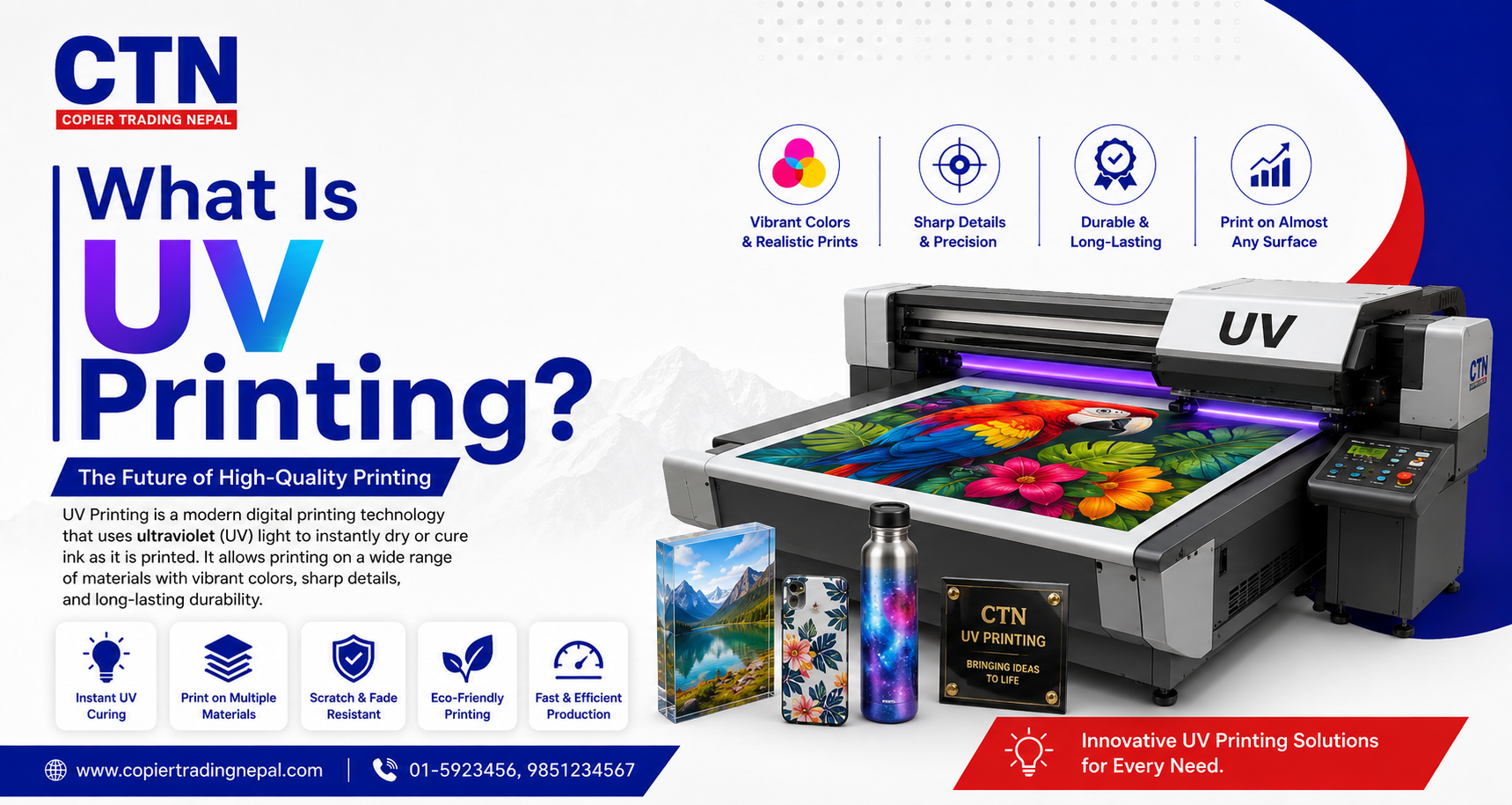
What Is UV Printing?
Most printing methods need ink to soak into a material and air-dry before it can be handled. UV printing skips that wait entirely — the ink hardens the instant it's exposed to ultraviolet light, coming off the machine ready to touch, ship, or install. That single difference is why UV printing has become the go-to method for everything from acrylic signage to printed phone cases and wood plaques.
What Is UV Printing?
UV printing is a digital printing process that uses ultraviolet light to instantly cure (harden) special UV ink as it's deposited onto a surface. Instead of the ink absorbing into the material and drying over time like solvent or water-based inks, UV LED lamps built into the printer solidify each layer of ink the moment it's printed.
Ink Jetted
Printer deposits tiny droplets of UV ink onto the surface
UV Light Passes
An LED UV lamp on the print carriage follows right behind
Instant Cure
Ink hardens in a fraction of a second on contact with UV light
Ready Immediately
Surface can be handled, stacked or shipped right away
How UV Printing Differs from Solvent & Inkjet
The core difference comes down to how the ink behaves after it leaves the print head. That one difference changes what each method is best suited for.
Solvent / Eco-Solvent
Ink partially absorbs into flexible media like flex banners and vinyl, then air-dries. Best for large, flexible outdoor signage.
UV Printing
Ink cures instantly on the surface rather than absorbing into it, allowing direct printing on rigid and non-porous materials.
What Can You Print On?
UV printing's biggest strength is versatility of substrate. A single UV flatbed or hybrid printer can move between very different jobs without changing machines.
This is what makes UV printing popular for corporate gifting, indoor signage, personalized items, and rigid POS displays — jobs a solvent or standard inkjet printer simply can't handle.
Ask what a print shop can put on wood, glass or acrylic, and you're really asking whether they have UV — it's the one method that prints on almost anything flat.
— Common distinction print shops use when scoping a jobKey Advantages of UV Printing
- Instant curing means no drying time and immediate handling or shipping
- Sharper detail and color vibrancy since ink sits on top of the surface rather than spreading into it
- UV-cured prints resist fading, scratching and moisture better than many air-dried inks
- Can print white ink and varnish layers, enabling printing on dark or transparent materials
- Supports raised, textured, or embossed-effect printing by layering multiple ink passes
Limitations to Keep in Mind
- UV printers and ink typically cost more upfront than solvent equipment
- Cured ink sits slightly raised on rigid surfaces, which isn't ideal for materials needing to fold or flex repeatedly
- Flatbed UV printing is generally slower per square foot than roll-to-roll solvent printing for large banner runs
- UV lamps and bulbs are a maintenance item that need periodic replacement
Common UV Printing Use Cases
| Application | Typical material |
|---|---|
| Indoor signage & nameplates | Acrylic, PVC board |
| Corporate gifting & awards | Wood, glass, metal |
| Personalized phone cases & accessories | Plastic, polycarbonate |
| POS displays & retail signage | Foam board, acrylic |
| Interior décor panels | Wood, tile, canvas |
Frequently Asked Questions
UV printing is a printing process where ink is cured instantly by ultraviolet light as it's applied, rather than air-drying or soaking into the material, allowing it to bond to almost any flat surface.
UV printers can print directly on wood, glass, acrylic, metal, ceramic tile, leather, PVC board, and plastic, in addition to standard paper and flex media, since the ink cures on the surface rather than needing to absorb into it.
UV printers and UV ink typically cost more upfront than solvent setups, but they open up higher-margin rigid and specialty item printing that solvent printers cannot produce, often justifying the added cost for shops targeting corporate gifting and signage clients.
UV-cured ink generally resists fading, scratching and moisture better than many standard inks, though outdoor UV-printed items still benefit from a protective laminate for long-term sun exposure.